VSim: SMS Verification Code
- 4.7
- Rating
- 1.00M
- Installs
- Free
- Price

 Analysis by App-foxy
VSim is the kind of communication app that solves a very specific problem rather than trying to replace your everyday phone service. I used it as a way to obtain virtual phone numbers for online SMS verification, and my overall impression is clear: it can be genuinely useful when you need a separate number for a short-lived registration, but it requires realistic expectations about reliability, privacy, and which services will accept a virtual number.
That narrow purpose is also its main strength. Instead of asking you to buy another SIM card or keep a spare handset nearby, VSim puts the process inside an Android app. It is free to install, rated for Everyone, and developed by Elmond Technologies. The service has attracted over a million installs and holds a 4.7 average from around 237 thousand ratings, which suggests that the basic idea works well for a large audience. Still, popularity should not be confused with universal compatibility. A virtual number is not automatically accepted everywhere, especially for accounts that apply stricter anti-abuse checks.
How VSim fits into real-life SMS verification
The app belongs in the communication category, but I would not describe it as a normal messaging client. You are not opening it to chat with friends, manage a personal address book, or replace your carrier’s texting app. Its job is more practical: provide access to a virtual phone number that can receive an online verification message.
You May Also Like

 Blood Strike: 2.5 Anniversary
Blood Strike’s Loadouts Turn Every Drop Into a Tactical Gamble
A close look at Blood Strike’s custom loadouts: how fast access to signature weapons reshapes its battle royale rhythm, rewards preparation, and narrows the gap between fights.

 Pandora - Music & Podcasts
Pandora’s Music Is Easy to Start, but Harder to Recover
Pandora’s strength is its low-effort path from a seed to a station. Its weak spot is how much confidence it asks you to place in connection, setup, and quiet recovery.

 8 Ball Pool
 Is Built on Rivalries, Rematches, and Routine
A close look at the rivalries, rematches, shared routines, and unanswered safety questions that turn a quick pool match into a persistent mobile community.

 Samsung Music
’s Quiet Strength Is Playing What You Already Own
Its reach comes less from spectacle than from dependable access to a personal library. That simplicity is both the app’s strongest retention engine and its ceiling.

 AccuWeather: Weather Radar
AccuWeather Review: A Quick, Clear Forecast for Everyday Decisions
For everyday plans, the best forecast is the one you can understand quickly. AccuWeather makes rain timing, radar, and local conditions easy to act on, with a few trade-offs.

 Hill Climb Racing
Why Hill Climb Racing Still Turns Crashes Into One More Run
A tiny car, a bumpy hill and one more upgrade: Hill Climb Racing keeps resurfacing because its simple chaos makes every near-miss feel personal.
More From Our News Desk



A typical use might be signing up for a service that asks for a phone number before allowing access. If you do not want to connect that account to your personal number, a separate virtual number can create useful distance. The same approach can help when testing a service, separating personal and project-related registrations, or avoiding the need to carry a second physical SIM. The important distinction is that VSim is best viewed as a task-focused tool, not as a permanent second mobile identity.
When I approached it with that expectation, the concept made sense. The workflow is more convenient than finding a spare SIM, waiting for delivery, activating it, and remembering where you put it. It also avoids switching cards in and out of a phone. For occasional verification, that reduction in physical hassle is the app’s most convincing advantage.
The practical workflow matters more than the headline
The useful habit is to decide what you are verifying before choosing a number. If you are registering for a service with strict phone checks, do not assume that any available virtual number will pass. Some platforms recognize number types, reject ranges associated with temporary services, or limit repeated registrations. VSim can present a number and receive a code, but acceptance ultimately depends on the outside service sending the message.
I would also treat each number as part of a short, organized workflow. Choose a number, request the code, enter it promptly, and keep a private note of which service it was used for. That last step is easy to overlook. If you later need to recover the account, change its security settings, or explain why a registration is tied to a number you no longer control, poor record-keeping can turn a quick shortcut into an avoidable problem.
A second useful habit is separating low-risk registrations from important accounts. A virtual number may be suitable for trying a site or creating a temporary project account, but I would be cautious about using it as the sole recovery method for banking, health, work, or other accounts where losing access would be serious. For those situations, a personal mobile number or a dedicated long-term SIM is usually the safer choice.
Where the app is genuinely convenient
The strongest case for VSim is convenience without extra hardware. Someone who runs occasional online tests, manages several small projects, or wants to keep a personal number away from a new service may appreciate having a separate verification route in one place. It can also be helpful for travelers or people whose current SIM setup makes receiving a particular message inconvenient, provided the service they are using accepts the number.
There is a less obvious benefit for people who value compartmentalization. A personal number often becomes attached to many accounts over time, and separating a casual registration from that identity can reduce clutter. This does not make the registration anonymous, and it should not be treated as a guarantee of privacy, but it can keep a low-priority account from being mixed with your main contact details.
The app’s free entry point makes experimentation easier. You can see whether this kind of service fits your routine before committing to another physical line. However, the presence of in-app purchases, ranging from $0.99 to $49.99 per item, means the free installation should not be interpreted as unlimited access to every number or every use case. Anyone planning frequent verification should check the cost at the moment of use and decide whether the convenience still makes sense.
What the rating tells me—and what it does not
The 4.7 average and roughly 4.3 thousand written reviews indicate strong satisfaction overall, while the large rating base gives that score more weight than a handful of enthusiastic comments. I see this as evidence that VSim delivers a workable experience for many ordinary verification tasks.
At the same time, an SMS verification service is unusually dependent on conditions outside the app. The result can vary according to the platform you are registering with, the number available at that moment, message delivery, and the way the recipient service classifies virtual numbers. A high rating cannot remove those variables. It mainly tells me that the app’s central workflow has been useful to many people, not that every code request will succeed.
This is why I would judge the app by the quality of the specific task rather than by the rating alone. If your need is occasional and low-risk, the convenience may outweigh the uncertainty. If you require guaranteed access to one account over a long period, the rating is less relevant than having a number you control continuously.
The meaningful weakness: temporary convenience can create permanent headaches
The biggest limitation is not necessarily the interface; it is the relationship between a virtual number and account ownership. A number that works today may not be the number you can use later. If an online service sends a second verification request weeks afterward, you need to know whether the same number remains available and whether you can still receive messages through it.
That makes VSim a poor fit for accounts that depend heavily on SMS recovery. Imagine using a virtual number to create an account, then losing access after changing phones, clearing your notes, or waiting until the number is no longer available. The original registration may have been successful, but the long-term account experience can still be fragile. I would not build an important digital identity around a number intended mainly for one-time verification.
There is also a trade-off between speed and control. A physical SIM gives you a clearer sense of ownership and continuity, while an online service is easier to obtain but can feel less predictable. VSim removes the inconvenience of hardware, yet that convenience comes from relying on a service layer rather than directly controlling the mobile line.
Another point worth keeping in mind is responsible use. A virtual number should not be used to evade a platform’s rules, create misleading identities, or send unwanted messages. The app’s legitimate value is in separating contact details and handling ordinary verification needs, not in bypassing safeguards. Users who need a number for business compliance, regulated services, or formal identity checks should choose a solution designed for that purpose.
Three workflows where VSim makes sense
First, consider a freelance designer testing a new collaboration platform. The designer wants to inspect the registration process and notification flow without immediately attaching the project to a personal number. A virtual number can be a sensible testing layer, especially when the account is temporary and no critical recovery depends on it.
Second, imagine a person joining a community or marketplace that requires SMS verification but is not expected to become a long-term part of their digital life. Here, VSim may reduce exposure of a personal number while keeping the registration process separate. The user should still read the platform’s rules and avoid assuming that separation means complete anonymity.
Third, a small team might use different numbers while evaluating several services. The useful technique is to keep a simple private log of the service, the number used, and the purpose of the account. That makes it easier to identify which registration belongs to which project and prevents a forgotten virtual number from becoming a mystery later.
These examples show the app at its best: short, deliberate tasks with limited consequences. They also show why the same tool is unsuitable for every account. The more valuable and permanent the account, the more important number continuity becomes.
How it compares with the usual alternatives
Compared with buying a prepaid SIM, VSim is faster and less physical. You do not need another card, another device, or a trip to a store. The prepaid option, however, generally gives you a more tangible connection to the number and may be better for repeated access, long-term recovery, or services that reject virtual numbers.
Compared with using your main number, VSim offers better separation. Your personal line remains less exposed to casual registrations, and your account list can be easier to compartmentalize. The cost is that you may have less certainty about future access, and some services may treat the virtual number differently from a standard mobile line.
Compared with a second long-term number from a carrier, VSim is more convenient for occasional use but less convincing as a permanent identity. A dedicated carrier line is usually the better choice for work, family communication, two-factor recovery, or any account you expect to keep for years. VSim is the lighter tool for a narrower job.
That comparison also explains why I would not recommend choosing it simply because it is free to install. The right question is not whether it replaces every alternative. It is whether the convenience of an online verification number is worth the limitations for the particular account you have in front of you.
Device support, cost, and everyday usability
The current version is 3.1.0-gp, and it runs on Android devices using version 6.0 or later. That makes the app accessible on a broad range of Android phones, including older hardware that may not support newer applications. I would still keep the operating system updated where possible, especially because verification involves account access and personal information.
VSim is free to download, but optional purchases sit between $0.99 and $49.99 per item. The wide range suggests that light users and frequent users may have very different experiences with the cost. For a single occasional registration, paying a small amount for convenience may be reasonable. For repeated attempts, failed deliveries, or several accounts, expenses can accumulate quickly, so I would set a limit before starting rather than purchasing impulsively during a time-sensitive signup.
The Everyone age rating makes the app broadly accessible, but that does not mean every use is appropriate for every age or situation. Younger users should understand that a virtual number is still connected to account decisions and should not be used to bypass age restrictions or service rules. The rating describes accessibility, not a promise that every third-party platform will accept the number.
Who should use it and who should skip it
I would recommend VSim to people who need an occasional SMS verification number, want to separate casual registrations from a personal line, or prefer not to manage an additional physical SIM. It is particularly appealing when the account is low-risk, the registration is time-sensitive, and the user understands that virtual-number acceptance varies.
I would steer away from it if you need a dependable number for account recovery, ongoing customer contact, regulated identity checks, or important two-factor authentication. In those cases, a normal mobile line that you control over time is the stronger option. I would also skip it if you are uncomfortable tracking which number belongs to which account or if you expect every service to treat virtual and carrier numbers identically.
My practical recommendation is to use it selectively. Before paying for a number, check whether the service allows virtual numbers and consider what happens if you need another code later. After registration, add a more permanent recovery method whenever the account permits it. That small extra step turns VSim from a risky shortcut into a more sensible part of a broader account-management routine.
Final verdict on VSim
VSim succeeds because it focuses on a real inconvenience: needing an SMS-capable number without buying and managing another physical line. Its strong user rating, free installation, broad Android compatibility, and straightforward purpose make it an appealing option for occasional verification. I found the concept most convincing when the task was temporary, separate from my main identity, and not tied to an important recovery process.
Its weakness is equally clear. A virtual number is not the same as a permanent mobile line, and the app cannot guarantee that every outside service will accept one or that future access will remain effortless. The in-app purchase range also means frequent use deserves a careful cost check.
My verdict is positive but specific: VSim is a useful verification tool, not a replacement for a dependable personal number. If you treat it as a controlled, low-risk solution and keep permanent accounts tied to a number you truly control, it can save time and reduce unnecessary exposure of your main line. If you need continuity above all else, a carrier SIM or dedicated long-term number remains the better choice.
FAQs for VSim: SMS Verification Code
01What is VSim: SMS Verification Code used for?
VSim: SMS Verification Code is designed to help users receive SMS verification messages when registering for or accessing online services. It can be useful for apps, websites, and platforms that require a one-time code during sign-up or login. Availability depends on the selected country, service, and phone number inventory, so not every platform or verification request is guaranteed to work.
02How do I receive a verification code with VSim?
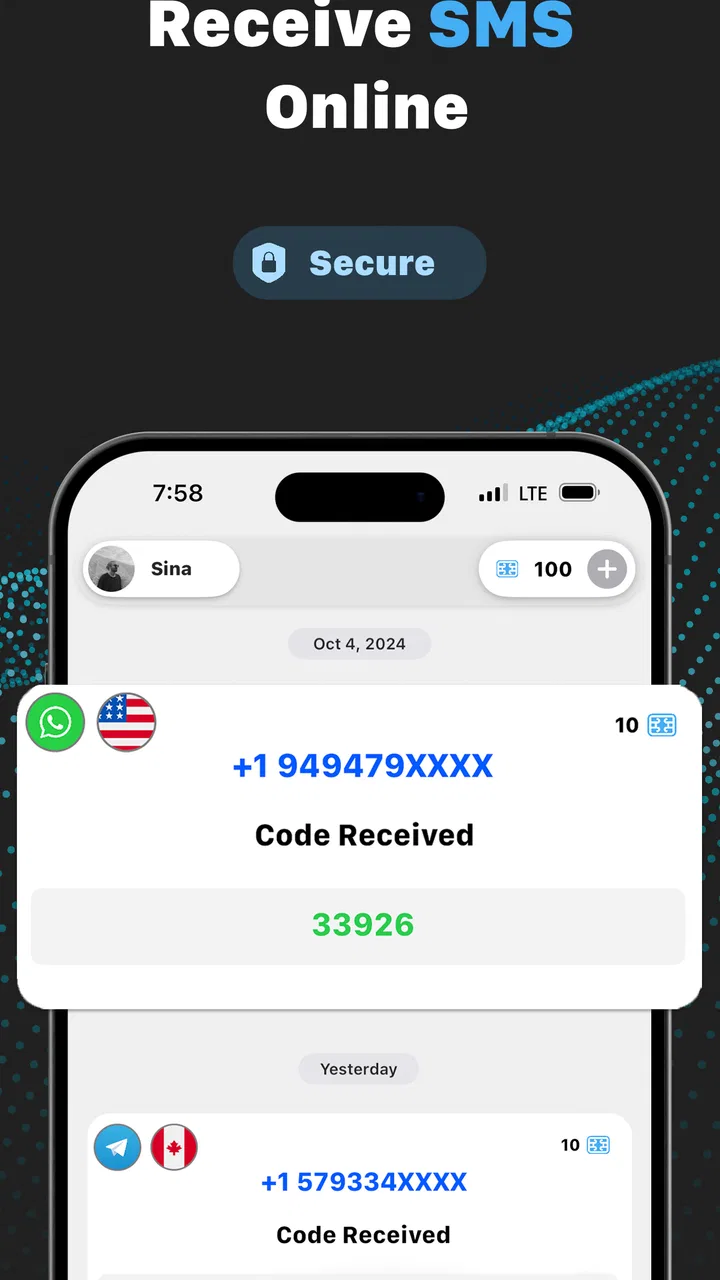
After opening the app, you generally choose the country and service you need, select an available virtual number, and request an SMS. If the platform sends a verification message successfully, the code should appear inside the app. In my experience, the process is straightforward, but delivery can take time or fail when a number has already been used, the service blocks virtual numbers, or the selected number is unavailable.
03Is VSim: SMS Verification Code free to use?
The app may be free to download, but receiving verification messages can involve charges, credits, or in-app purchases depending on the country, service, and number selected. Before confirming a request, carefully review the displayed price and any available balance information. Costs can vary considerably, and a failed verification attempt may not always be refundable, so checking the app’s terms is important.
04Can I use VSim for every website or application?
No service can guarantee compatibility with every website or application. Some platforms accept virtual or temporary numbers, while others specifically block them to prevent spam, duplicate accounts, or fraudulent registrations. VSim may work well for supported services, but results depend on the platform’s policies, the number’s history, and regional restrictions. Avoid using it for accounts that require permanent personal access.
05Is it safe to use VSim for important accounts?
VSim can be convenient for short-term verification, testing, or services where you do not want to share your personal number, but it should be used carefully. A temporary or shared number may not remain under your control, which can make password recovery and future login verification difficult. For banking, email, social media, or other important accounts, a permanent private phone number is generally safer.
Pros
- Receives verification texts without using your personal phone number.
- Simple interface makes number selection and code retrieval quick.
- Useful for testing accounts
- apps
- and services during development.
- Supports temporary numbers for situations requiring extra privacy.
- Can reduce spam exposure on your primary mobile number.
Cons
- Many numbers are shared
- so some services may reject them.
- SMS delivery can be delayed or fail during periods of high demand.
- Temporary numbers may be reclaimed without warning.
- Not suitable for banking or accounts requiring long-term recovery access.
- Availability and supported countries may vary by number and service.

VSim: SMS Verification Code
Gallery